.png)


Barolo Wine: The King of Italian Reds, Explained
Someone at the table always asks the same question when the wine list lands: what actually is Barolo, and why is it the most expensive glass on the page? It is a fair question. Barolo is not just another Italian red. It is arguably the most serious wine Italy makes, and once you understand what is in the glass, the price makes a lot more sense.
This is our plain-English guide to Barolo: where it comes from, what it tastes like, why it costs what it does, and what to eat with it. If you want to try it rather than just read about it, our Barolo Set Menu is built around exactly that.
What Is Barolo Wine? Understanding the Nebbiolo Grape
Barolo is a red wine from the Barolo region of Piemonte in north-west Italy, made entirely from the Nebbiolo grape and grown across eleven villages in the Langhe hills, with five main communes being Barolo, La Morra, Castiglione Falletto, Monforte d’Alba, and Serralunga d’Alba, while Barolo itself gives the wine its name. The production zone was demarcated in 1896, and Barolo was officially designated as DOCG in 1980, Italy’s strictest wine classification, which controls everything from the permitted vineyard area to how long the wine must age before it can be sold.
Barolo has carried the nickname “the wine of kings, the king of wines” since the House of Savoy adopted it as their court wine in the nineteenth century. It is not marketing. Nebbiolo has always been a difficult, temperamental grape to grow well, and Barolo is what happens when it is grown in exactly the right place, where the local terroir suits it, by people who know what they are doing.
What Does Barolo Taste Like?
This is the part that surprises people. Barolo looks pale, almost like a Pinot Noir, but it hits the palate with serious tannins and high acidity, so it is not for drinkers expecting soft, fruity wines. The classic notes are roses, tar, dried cherry, liquorice and, in older bottles, truffle and leather. It is a wine that rewards patience: young Barolo can taste tight and austere, and these wines tend to need time, with many bottles requiring 12–15 years to fully develop, while a Barolo with eight or ten years on it opens into something much softer and more complex.
Serving Barolo Properly
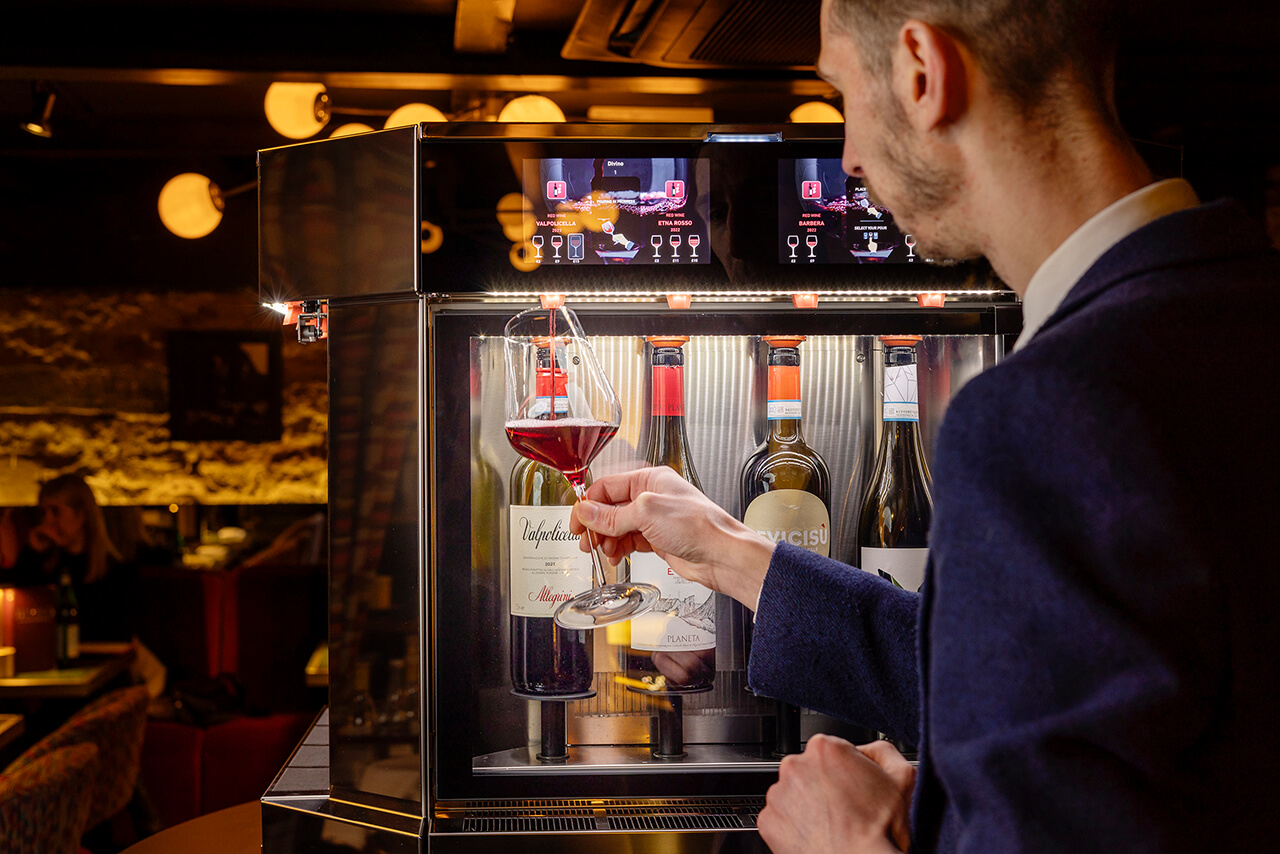
Serve it slightly below room temperature, around 16 to 18 degrees, and give it time to breathe. A younger bottle benefits from an hour in a decanter. If you are trying it for the first time, ask for a taste pour before committing to a full glass or bottle; our Enomatic wine dispenser lets you do exactly that, in a 25ml taste, a 125ml half glass or a full 175ml pour.
Why Is Barolo So Expensive?
Three reasons, and none of them are about marketing. First, Nebbiolo is a low-yielding grape that ripens late and needs a very specific slope and aspect to do well, which limits how much can be grown. Second, DOCG rules require Barolo to age for a minimum of thirty-eight months before release, including at least eighteen months in oak, which means barolo production ties up cellar space and capital for years before a single bottle is sold, all in service of quality. Third, the production zone is genuinely small: eleven communes in the Langhe, nowhere else. Even though Barolo production increased by 47% from 1990 to 2004, the category remains limited and tightly regulated, and many producers still cannot simply expand because the best vineyard land is fixed.
Put together, that is a wine that takes years to make, from a grape that does not grow generously, in a place that cannot expand. The price reflects the wait, the prestige, and the high prices these bottles command as much as the bottle.
Barolo, Amarone, Chianti: How the Big Italian Reds and the Barolo Region Compare
Barolo is often mentioned in the same breath as Amarone della Valpolicella and Chianti, but they are three different wines from three different corners of Italy. If premium italian wine is the broad category, Barolo is a more specific benchmark, alongside brunello di montalcino and vino nobile di montepulciano. Chianti, from Tuscany’s Sangiovese grape, is lighter, brighter and more food-friendly on a Tuesday night. Amarone, from Veneto, is made from grapes dried before pressing, giving it a richer, more raisined intensity at a similarly high price point to Barolo (we cover that wine properly in our Amarone Wine Guide). Barolo sits apart from both: structured, tannic and built to age, and among the great wines of Italy it is one of the most age-worthy.
Our three set menus follow roughly that same ladder of intensity, from the Montepulciano Set Menu through the Chianti Set Menu to the Barolo Set Menu, so you can trade up as your palate (and the occasion) demands.
What to Eat with Barolo
Barolo’s tannin and acidity need food with enough fat and depth to stand up to it, so it should not be paired with light, low-protein dishes. The classic pairings from Piedmont itself are white truffle dishes, braised beef (brasato al Barolo, traditionally braised in the wine itself), mushroom risotto with wild mushrooms, and hard, aged cheeses. Aged Grana Padano, the DOP cheese we serve at Divino, made with vegetable rennet so it also suits vegetarian guests, is a genuinely excellent match: its salt and umami work with Barolo’s tannin instead of fighting it, and it makes drinking Barolo feel balanced rather than austere.
• Braised or slow-cooked red meat, especially beef and game
• Mushroom or truffle-based pasta and risotto
• Aged hard cheeses, particularly Grana Padano
• Rich, meat-based ragù rather than lighter tomato or seafood sauces when serving it
Barolo at Divino Enoteca
Barolo has a proper home on our wine list, which runs to more than two hundred bottles with up to forty available by the glass through the Enomatic, giving wine lovers easy access to Barolo without committing to a full bottle. If you want to build a whole evening around it, the Barolo Set Menu pairs the wine with dishes chosen to match its weight and structure, in the setting that makes Divino what it is: a vaulted stone cellar in the heart of Edinburgh’s Old Town, all soft light and oak floors, the kind of room that makes an expensive bottle feel like the right decision rather than an indulgence.
If you would rather learn about Barolo and other serious reds properly before committing to a bottle, our monthly themed wine tasting evenings are worth booking, giving you the chance to try many wines in one sitting and learn more about the winery behind the bottles; check what is coming up on our wine tasting events page. You might also enjoy our Italian regional wines guide, which sets Barolo in context alongside the other regions on our list, and our piece on pairing wine with Italian food for more on why some combinations simply work better than others.
How to Order Barolo Like You Know What You’re Doing
You do not need to be an expert to order well. Tell your server what you are eating, or plan to eat, and let Barolo’s age guide the choice: a younger bottle if you want structure and food to match it, an older one if you want something rounder to drink more on its own. Ask for a taste pour first if you are unsure. And do not rush it. Barolo is a wine that rewards a slow evening, which is exactly what a proper dinner in a wine cellar is for.
Understanding a Barolo Label
Two words on a label change what is in the bottle considerably. “Barolo” on its own is a blend from across the eleven communes and is usually the most approachable style, built to drink sooner. A single-vineyard or commune-specific Barolo, naming a place like La Morra, Monforte d’Alba or Serralunga d’Alba, tends to be more expensive and more particular in character, since each commune’s soil and aspect push the wine in a different direction. Named vineyard sites within the region are often referred to as crus. Cannubi and Sarmassa are two well-known cru vineyards in Barolo. La Morra generally gives a softer, more perfumed style and produces nearly a third of all Barolo wine, while Serralunga produces something more structured and built to age longer. The Ratti Map is a well-known reference that classifies Barolo vineyards by quality potential. La Serra is another noted site, often associated with a lighter, more elegant, mineral expression. “Barolo Riserva” on a Barolo label means it has been aged even longer than the standard minimum, typically at least five years from harvest, and will usually be the most powerful, slowest-to-open bottle on the list.
None of this needs to be memorised before you visit. It is simply useful to know that two Barolos at similar prices can taste quite different depending on where exactly in the Langhe they come from, which is exactly the kind of thing worth asking a server about rather than guessing.
Is Barolo Worth the Occasion for Wine Lovers?
It is a fair question to ask before spending what Barolo costs, especially since the price also reflects prestige within the wider wine region, not just scarcity. Our honest answer: it depends what you want from the bottle. If you want something easy to drink on a Tuesday, Barolo is the wrong choice, and a glass from the Montepulciano or Chianti Set Menu will serve you far better for far less. If you want a wine that gives the evening genuine weight, that rewards slowing down and pairing properly with food, and that you will still be thinking about on the walk home, Barolo earns its price for many wine lovers because it delivers the kind of structured wines that improve with time. It is a wine for an occasion, not a backdrop, and it works best when the evening is built to match it.
Frequently Asked Questions About Italian Wine
Is Barolo a dry wine?
Yes. Despite its deep, sometimes fruit-forward aroma, Barolo is bone dry with firm tannin and high acidity, closer in structure to a serious Bordeaux than to a soft, fruity red.
What is the best food pairing for Barolo?
Braised red meat, mushroom or truffle dishes, and aged hard cheeses like Grana Padano all stand up well to Barolo’s tannin. Lighter dishes tend to get overwhelmed by it.
How long does Barolo need to age?
By law it cannot be released until at least thirty-eight months after harvest, including eighteen months in oak. Many serious bottles are held back for a decade or more before they are considered at their best, though younger Barolo is very drinkable with the right food.
Is Barolo sweet or bitter?
Neither, really. It is dry with pronounced tannin, which can read as slightly bitter or astringent on its own, especially when young. Food, particularly fat and salt, softens that impression considerably.
What is the difference between Barolo and Barbaresco?
Both are made from Nebbiolo in Piedmont and share a similar flavour profile, but Barolo lies about 3 km southwest of Barbaresco, its vineyards sit nearly 50 m higher, and its continental climate, shaped in part by the Tanaro river, helps explain why it tends to be more powerful and benefits from longer ageing, while Barbaresco is typically softer and ready to drink sooner.
Does the commune on a Barolo label actually matter?
Yes, more than most people expect. The zone is small, only about 7 miles long and 5 miles wide, but differences in soils and exposure still matter a great deal: Tortonian areas often give more perfume, while Helvetian areas tend to add firmer structure, which in turn shapes the style growers produce wines in. Barolo from La Morra tends to be softer and more perfumed, while a bottle from Serralunga d’Alba is usually firmer and built to age for longer. It is worth asking your server which style suits what you are eating.