


Montepulciano Wine Guide: The Everyday Italian Red Worth Knowing
Montepulciano has an image problem, and it is mostly down to confusion rather than quality. Ask a wine merchant for a bottle and you might get one of two completely different wines, from two different parts of Italy, that happen to share a name through nothing more than historical coincidence.
Here is what actually separates them, what the wine in your glass should taste like if it is the right one, and why Montepulciano deserves a better reputation than the bargain-bin status it is often stuck with.
The Great Montepulciano Confusion
Centuries ago, the grape now grown widely across Abruzzo acquired the name Montepulciano somewhere along the way, most likely through a mix-up with the Tuscan hill town of the same name, which Renaissance-era nobility already prized for its own wine. The Tuscan town’s wine, Vino Nobile di Montepulciano, is made mainly from Sangiovese and has nothing to do with the Montepulciano grape itself.
The result, centuries later, is genuine confusion at the wine shop: Montepulciano d’Abruzzo is the grape, grown mainly in Abruzzo on Italy’s eastern coast, while Vino Nobile di Montepulciano is a Sangiovese-based wine from a town two regions away in Tuscany. They are not related, do not taste alike, and only share a name through an old naming accident that nobody ever bothered to untangle.
What Montepulciano d’Abruzzo Red Wine Actually Tastes Like
Done well, Montepulciano d’Abruzzo is dark-fruited and aromatic, with plum and black cherry doing most of the work alongside a gentle, approachable structure; it is typically medium to full bodied without losing its soft-tannined feel or needing years of ageing to taste good. Its tannins are soft and its acidity moderate, which makes it genuinely easy to drink without food, though it holds up just as well alongside a tomato-based pasta or a plate of grilled meat.
Most Montepulciano is not built for long cellaring in the way Barolo or a serious Chianti Riserva is, and that is precisely the point: it is designed to be opened and enjoyed within a few years of bottling, although the best reserve bottlings can age well.
Why It’s Been Underrated for So Long
Abruzzo spent decades producing enormous volumes of Montepulciano for the bulk wine trade, cheap, high-yield, and sold largely on price rather than character. That history left a lingering reputation that the wine has struggled to shake, even as a growing number of serious, low-yield producers in the region have spent the last twenty years proving the grape can do considerably more than fill a value three-for-two offer.
A well-made Montepulciano d’Abruzzo from a producer who has actually restricted yields and taken the vineyard seriously can rival wines costing considerably more, which is exactly the kind of quiet value our Barolo and Amarone guides cover at the other end of the price spectrum.
Don’t Overlook the Rosé: Cerasuolo d’Abruzzo
The same Montepulciano grape also produces one of Italy’s most underrated rosés, Cerasuolo d’Abruzzo, a DOC devoted specifically to rosé production from Montepulciano fruit rather than treating pink wine as an afterthought. It tends to be darker and more structured than most rosé drinkers expect, closer in weight to a light red than the pale, delicate styles that dominate supermarket shelves.
It is worth seeking out if your only experience of Montepulciano is the red, since it shows a genuinely different side of the grape: the same dark fruit character, carried in a lighter, more food-friendly style that works just as well on a warm evening as it does alongside a proper meal.
Montepulciano on Divino’s Wine List
Our wine list carries a genuine range of Montepulciano d’Abruzzo, running from easy, everyday-drinking expressions through to more serious reserve-style bottlings from producers who have clearly put real care into the vineyard rather than chasing volume. It is a good place to start if you want to taste the difference between a straightforward Montepulciano and one built with more ambition, without committing to a full bottle of each.
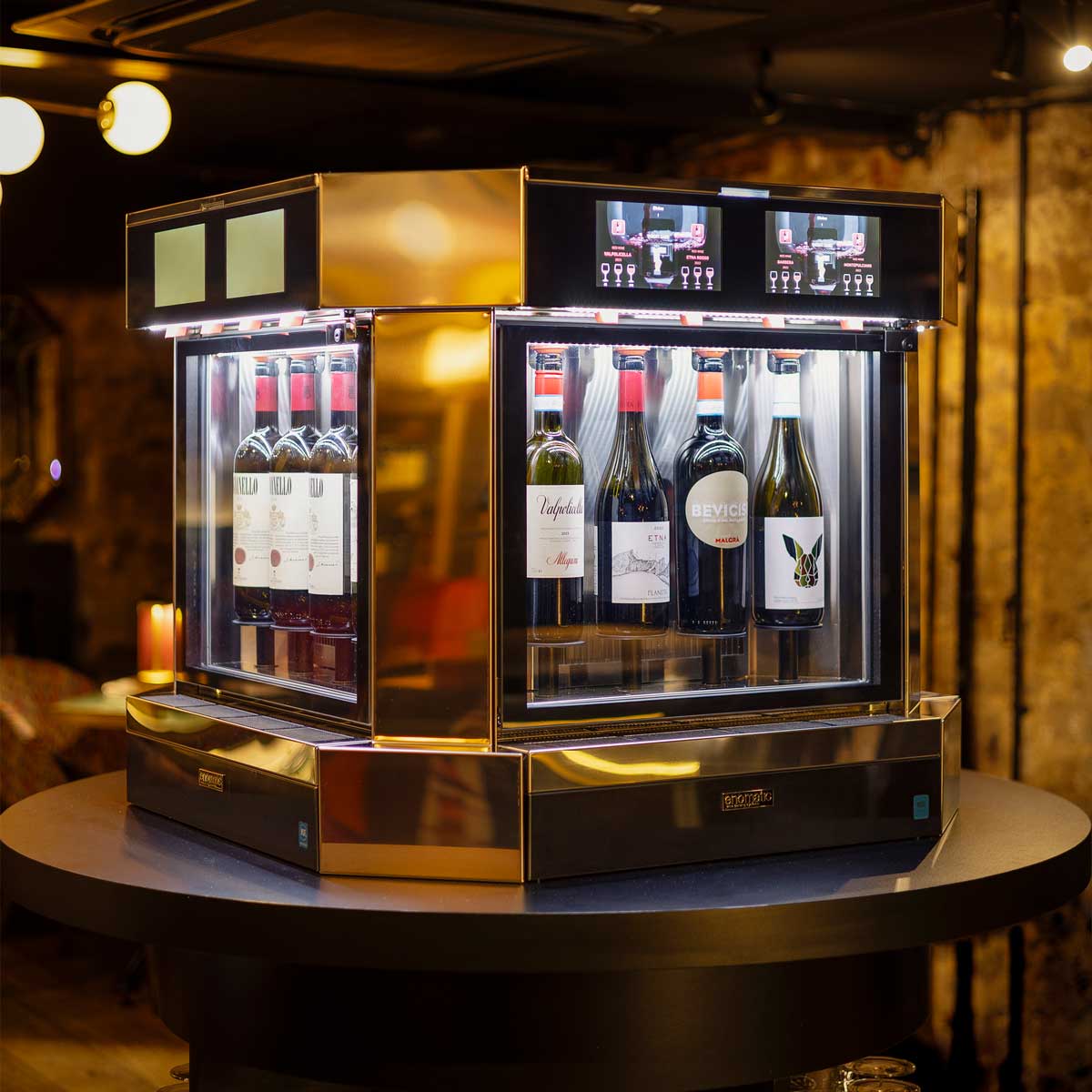
Our Enomatic dispenser makes that comparison considerably easier to do properly, since tasting two or three Montepulciano wines side by side in small pours tells you more about the grape’s range than a single bottle ever could.
The Montepulciano Set Menu
Divino’s Montepulciano Set Menu is available Sunday to Thursday at £38 per person, and runs a genuinely well-built three courses: a choice of bruschetta, burrata from Puglia, or a traditional Sicilian aubergine caponata to start, followed by a main of strozzapreti with roasted cherry tomatoes and burrata, an oven-baked rigatoni with smoked provola and pecorino, or a roast chicken supreme, before finishing with an affogato, a wild berry panna cotta, or a vegan orange and chocolate tart.
It is an entry-tier menu in name, sitting alongside the Chianti and Barolo set menus at a more accessible price point, but there is nothing scaled-back about the cooking itself. It is simply built for a quieter weeknight table rather than a special-occasion sitting.
Food Pairing
Montepulciano’s soft tannins and dark fruit make it a reliable match for tomato-based pasta sauces, grilled or roasted red meats, and firmer Italian cheeses, without the need to think too hard about the pairing. It is also, as it happens, a genuinely good choice for warming into vin brulé if you want an Italian red with enough body to hold its character against orange, spice and heat, which our piece on the subject covers in more detail.
If a warm spiced glass sounds appealing before the colder months are over, our vin brulé guide is worth a read, and Montepulciano d’Abruzzo is exactly the kind of bottle it recommends reaching for.
A Wine Worth Taking Seriously
The lesson in all of this is a familiar one for anyone who has spent time with Italian wine: a region’s bulk-production history and its current best work are often two very different things, and it is worth judging a wine by what the best producers are doing now rather than what the cheapest bottlings on a supermarket shelf suggest. Montepulciano has earned that second look more than most.
Trying It for Yourself
The best way to actually understand Montepulciano is still to taste it rather than read about it, ideally against something from Tuscany or Piedmont so the difference in weight and character is obvious. Book a table and work through a few pours on the Enomatic, or come in specifically for the Montepulciano Set Menu if a full evening built around it appeals more.
Either way, go in expecting an easy-drinking, food-friendly red with genuine depth when the producer has taken it seriously, not the bulk-bottled stereotype the grape has spent decades trying to shake off. It rarely takes more than one proper glass to understand why that reputation never told the full story.
Frequently Asked Questions
Is Montepulciano d’Abruzzo the same as Vino Nobile di Montepulciano?
No, despite the shared name. Montepulciano d’Abruzzo is made from the Montepulciano grape, grown mainly in Abruzzo. Vino Nobile di Montepulciano is a Sangiovese-based wine from the Tuscan town of Montepulciano, and the two are unrelated.
What does Montepulciano wine taste like?
Dark-fruited and soft-tannined, with plum and black cherry character, moderate acidity, and an approachable style that rarely needs long ageing.
Is Montepulciano a good everyday wine?
Yes, it is widely regarded as one of Italy’s best-value everyday reds, though quality varies considerably between mass-produced bottlings and the more serious, low-yield producers now working in the region.
Does Divino serve Montepulciano wine?
Yes, our wine list carries a range of Montepulciano d’Abruzzo, and the Montepulciano Set Menu (£38, Sunday to Thursday) is built around the same name and spirit.
What food goes well with Montepulciano?
Tomato-based pasta, grilled or roasted red meats, and firmer Italian cheeses all pair reliably well, and it also holds its character warmed into vin brulé.